

Steadying the Seas: Global Marine Fin Stabilizer Market to Hit USD 32.3 Billion by 2035
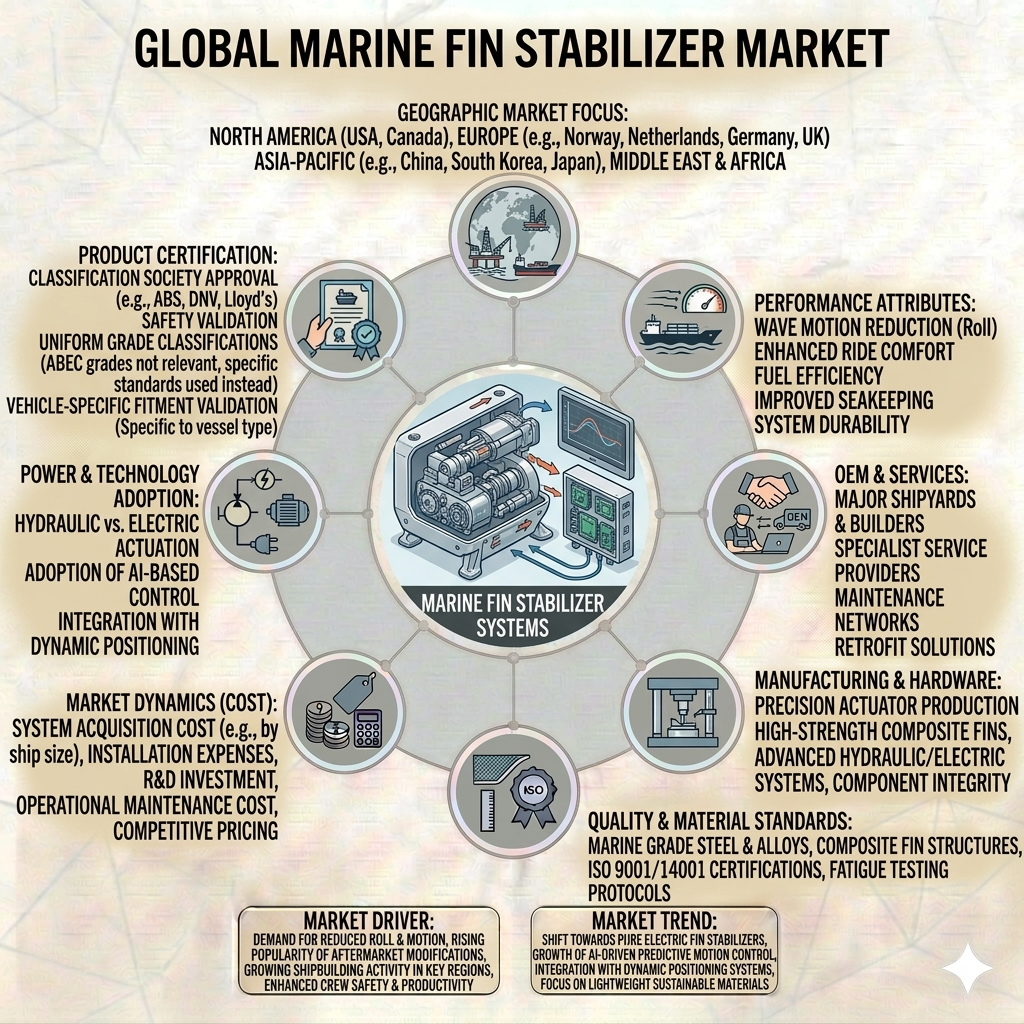
Marine Fin Stabilizer Market Outlook
The global marine fin stabilizer market is projected to grow from USD 10.4 billion in 2025 to approximately USD 32.3 billion by 2035.
NEWARK, DE, UNITED STATES, March 30, 2026 /EINPresswire.com/ -- The global maritime industry is prioritizing stability and sustainability as it navigates increasingly turbulent waters. According to the latest 2026 strategic analysis, the Global Marine Fin Stabilizer Market is valued at USD 10.4 billion in 2025 and is projected to skyrocket to USD 32.3 billion by 2035.
This massive 179.2% total growth reflects a 12.1% CAGR, fueled by a surge in the cruise tourism sector, naval modernization programs, and a critical industry-wide focus on reducing fuel consumption through hydrodynamic efficiency.
Technology in Focus: The Rise of Retractable Systems
The market is shifting away from fixed "non-retractable" fins toward sophisticated, automated systems that adapt to real-time sea conditions.
• Retractable Fin Stabilizers (65.0% Share): These are the gold standard for premium vessels. By retracting into the hull when not needed, they eliminate unnecessary drag, protecting the ship’s fuel economy and preventing damage during docking.
• The "Smart" Evolution: Between 2030 and 2035, the market will be defined by IoT-integrated stabilization. Modern units now use predictive AI to "read" oncoming waves, adjusting fin angles in milliseconds to counteract roll before passengers even feel it.
• Energy Efficiency: New regenerative actuators are entering the market, capturing energy from the water’s resistance to help power the ship’s internal systems, aligning with global ESG (Environmental, Social, and Governance) mandates.
Get Access of Report Sample:
https://www.futuremarketinsights.com/reports/sample/rep-gb-6171
Application Breakdown: Where Comfort Meets Command
The application of marine fin stabilizers is strategically divided across sectors where vessel stability directly impacts mission success and passenger well-being. The Passenger Vessels segment commands the largest market share at 40.0%, as cruise lines and high-speed ferry operators prioritize the "luxury experience" by making the reduction of motion sickness a top operational goal. In the defense sector, the Navy & Coast Guard segment is seeing high growth, as advanced stabilization is now considered vital for safe helicopter landings and maintaining weapons platform precision in high sea states. Meanwhile, the Luxury Yachts segment occupies a niche premium position, driven by intense demand for "zero speed" stabilization technology that ensures a steady, comfortable environment even when the vessel is at anchor in a bay.
Regional Leadership: A Global Map of Stability
The market’s expansion is geographically diverse, with high-tech manufacturing hubs in Europe and Asia-Pacific leading the way.
• United States (12.5% CAGR): Leading the world in growth due to its massive cruise industry base and the modernization of the U.S. Coast Guard fleet.
• Germany (11.8% CAGR): The heart of marine engineering excellence. German manufacturers are leading the shift toward lightweight composite fins and electric (non-hydraulic) actuators.
• South Korea (11.2% CAGR): Dominated by world-class shipbuilders who are increasingly integrating stabilization systems as a standard "off-the-shelf" feature for new commercial builds.
• Brazil (9.1% CAGR): An emerging powerhouse driven by offshore oil and gas support vessels that require extreme stability for deep-sea operations.
The Competitive Landscape: The Titans of Motion Control
The market remains highly specialized, with a few key players controlling the majority of the value chain:
• Naiad Dynamics (18.5% Share): The global leader, renowned for its active control technologies and dominance in the naval and superyacht sectors.
• Fincantieri S.p.A. & SKF Group: These giants provide highly integrated solutions that combine the physical stabilizer with the ship's overall hull design.
• Seakeeper Inc.: While famous for gyroscopes, their entry into the fin market is pushing innovation in "hybrid" stability systems.
• CMC Marine: Leading the "Electric Revolution" by replacing traditional high-maintenance hydraulics with clean, high-torque electric motors.
Frequently Asked Questions (FAQ)
1. What is the main difference between retractable and fixed fins?
Retractable fins can be pulled back into the hull, which is ideal for high-speed vessels that want to reduce drag and save fuel when the sea is calm. Fixed (non-retractable) fins are simpler and cheaper, typically used on slower vessels like tankers or fishing boats where drag is less of a concern.
2. How do fin stabilizers improve fuel efficiency?
While the fins themselves create a small amount of drag, they prevent the ship from rolling. A rolling ship travels a less efficient path and wastes energy. By keeping the hull steady, the vessel maintains a more consistent "trim," which can actually save fuel in rougher waters.
3. Can these systems be added to older ships?
Yes. The retrofit market is a massive growth area. Many cruise lines and yacht owners are choosing to install modern, more efficient fin systems during scheduled dry-dock maintenance to improve passenger comfort and meet new environmental standards.
4. What is "Zero Speed" stabilization?
Traditional fins require the ship to be moving so that water flows over them to create lift (like an airplane wing). "Zero Speed" or "At Rest" stabilizers use high-speed flapping or "paddling" motions to create stability even when the boat is completely stopped.
5. Are electric stabilizers better than hydraulic ones?
Electric systems are becoming more popular because they are quieter, use less energy, and eliminate the risk of hydraulic oil leaks into the ocean. However, hydraulics still offer the massive power needed for the world’s largest container ships and aircraft carriers.
Browse More Industry Reports :
Japan Marine Fin Stabilizer Market
https://www.futuremarketinsights.com/reports/marine-fin-stabilizer-industry-analysis-in-japan
Korea Marine Fin Stabilizer Market
https://www.futuremarketinsights.com/reports/marine-fin-stabilizer-industry-analysis-in-korea
Western Europe Marine Fin Stabilizer Market
https://www.futuremarketinsights.com/reports/marine-fin-stabilizer-industry-analysis-in-western-europe
Sudip Saha
Future Market Insights Inc.
+1 347-918-3531
email us here
Legal Disclaimer:
EIN Presswire provides this news content "as is" without warranty of any kind. We do not accept any responsibility or liability for the accuracy, content, images, videos, licenses, completeness, legality, or reliability of the information contained in this article. If you have any complaints or copyright issues related to this article, kindly contact the author above.
