

SNU Eye Clinic Explains Key Factors in ICL Surgery for High Myopia and Astigmatism

Dr. Chung Eui Sang, Chief Director of SNU Eye Clinic, speaking at a medical conference.
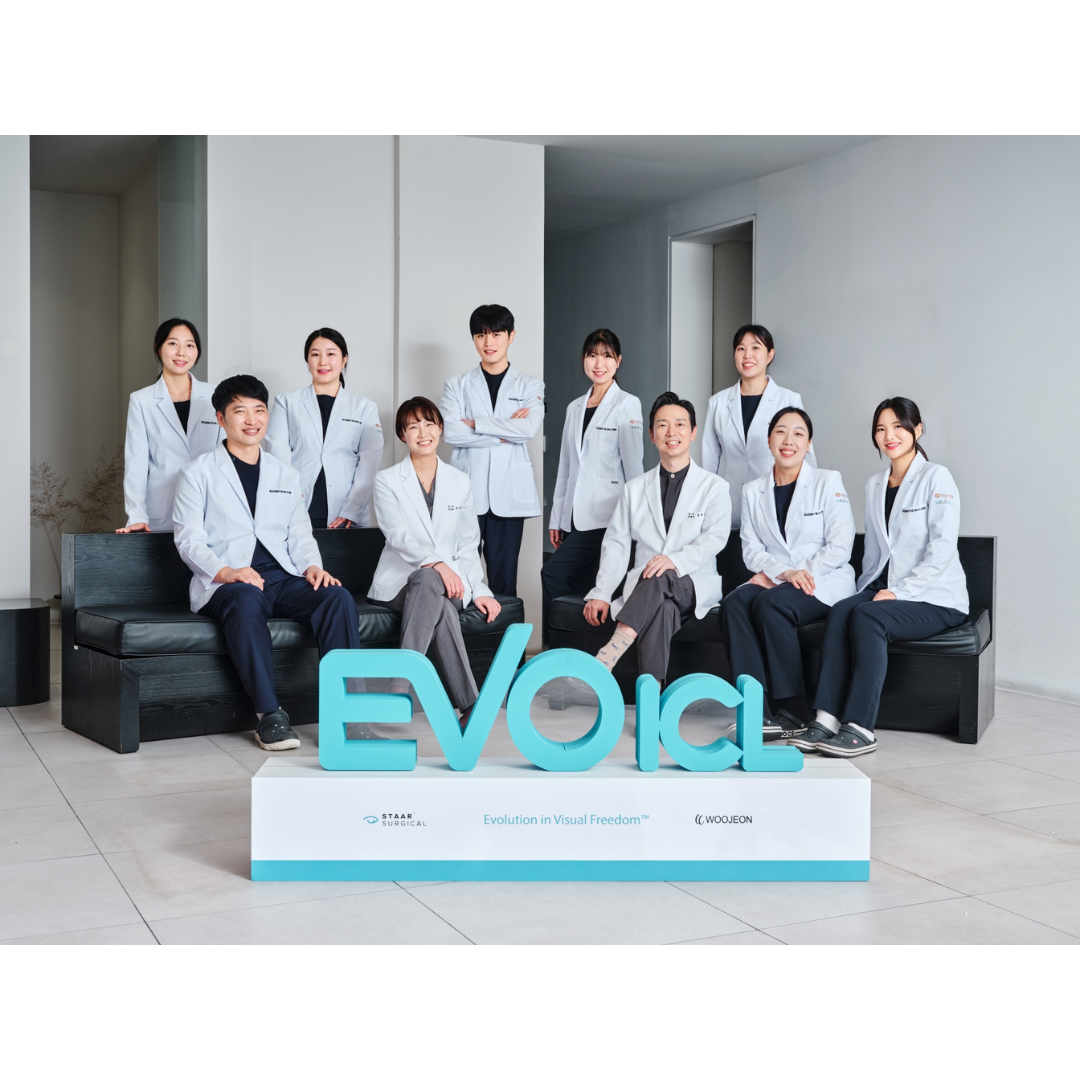
SNU Eye Clinic’s dedicated ICL team, trained by Dr. Chung Eui Sang, an ICL Expert Instructor.
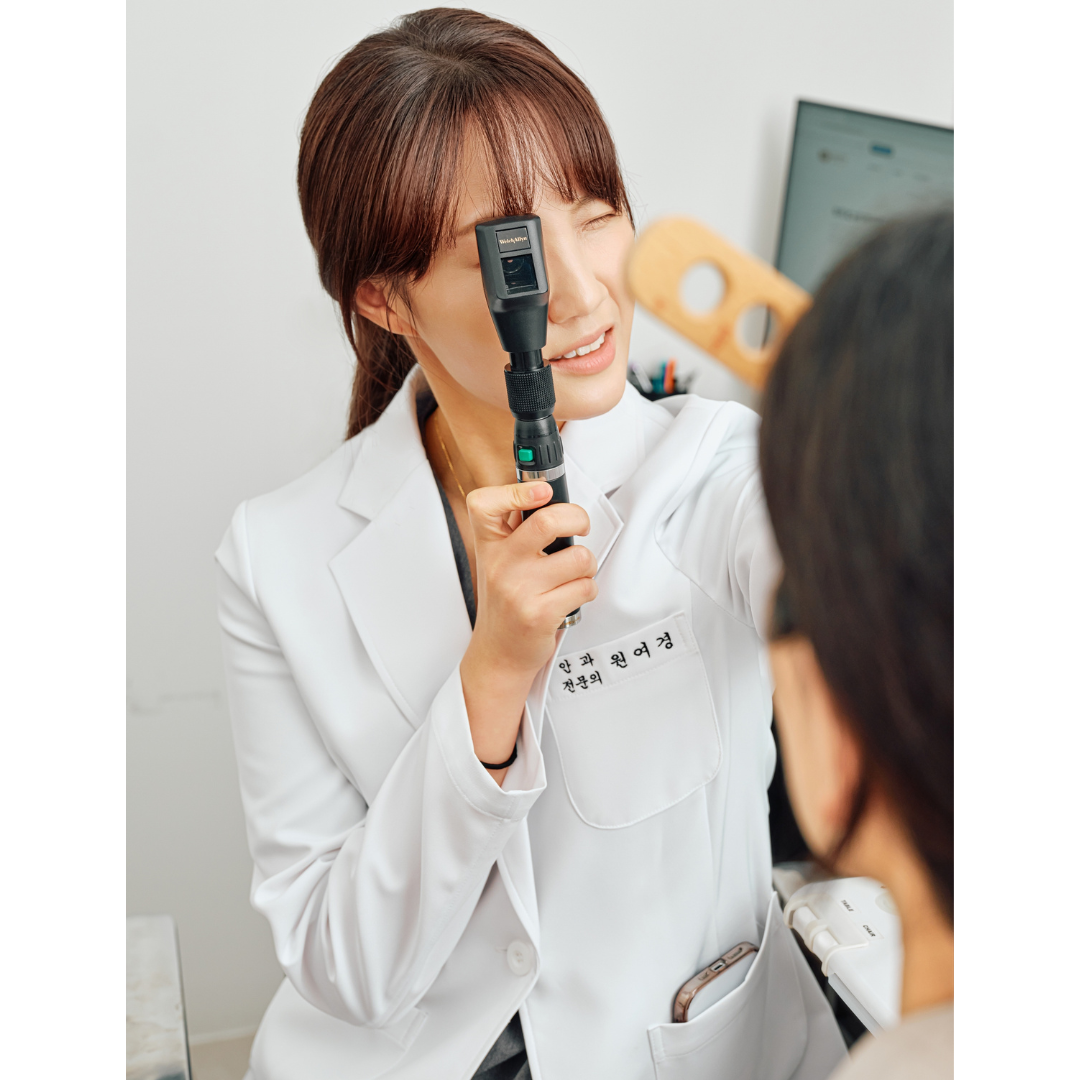
Dr. Won Yeo Kyung, ICL specialist at SNU Eye Clinic, conducting an eye examination.
SNU Eye Clinic explains how precise examinations and lens selection help guide ICL surgery for patients with high myopia and astigmatism
ICL surgery corrects myopia and astigmatism by implanting a specially designed lens made from a biocompatible material inside the eye. Unlike LASIK, LASEK, and SMILE surgery, ICL does not reshape the cornea with a laser, allowing the natural cornea and crystalline lens to remain intact. It may be a suitable alternative for patients with thin corneas or very high myopia that would otherwise require substantial corneal tissue removal. Nevertheless, patients must meet specific surgical criteria, including adequate anterior chamber depth, sufficient corneal endothelial cell density, and acceptable intraocular pressure.
For patients with significant astigmatism, accurately assessing both the degree and axis of astigmatism is particularly important. Astigmatism is a refractive error in which the cornea or crystalline lens has different refractive powers depending on the direction, preventing light from focusing precisely at a single point. If astigmatism is not adequately corrected after surgery, patients may experience overlapping contours or reduced visual clarity. Accurate astigmatism analysis and a carefully planned correction strategy are therefore essential.
One option for correcting astigmatism is the Toric ICL. Designed to correct myopia and astigmatism simultaneously, the Toric ICL must be positioned according to the astigmatism axis measured before surgery. Because the correction results may vary depending on postoperative lens positioning and residual astigmatism, comprehensive examinations and precise surgical planning are required.
Recently, SNU Eye Clinic has also drawn attention to its Zero Toric ICL approach for precision astigmatism correction. Using the Toric ICL, this approach aims to minimize residual astigmatism and lens rotation rates toward zero. Before surgery, the degree and axis of astigmatism, along with the internal structures of the eye, are carefully analyzed. These measurements guide the selection of lens power and size, as well as the intended implantation position, to achieve more precise astigmatism correction. However, surgical outcomes may vary depending on each patient's individual eye condition, making thorough preoperative examinations and professional medical judgment essential.
In ICL surgery, selecting the appropriate lens size is just as important as determining the correct lens power. A lens that is too large or too small for the available space inside the eye may affect the vault, or the distance between the implanted lens and the natural crystalline lens. Therefore, a detailed preoperative assessment of anterior chamber depth, corneal endothelial cell density, and internal ocular structures is necessary to select an appropriately sized lens.
Located in Gangnam, Seoul, South Korea, SNU Eye Clinic operates a dedicated ICL team to provide coordinated care throughout the entire treatment process, from detailed preoperative examinations and lens selection to surgery and postoperative follow-up. The team consists of optometrists specializing in ICL examinations, coordinators, and medical professionals who work together throughout every stage of the patient's ICL journey, including examination, consultation, surgery, recovery, and follow-up care.
International patients traveling to South Korea for ICL surgery should also consider whether clear communication with their medical team will be available throughout treatment. SNU Eye Clinic provides an international patient care environment with on-site interpretation services in multiple languages, including English, Chinese, Mongolian, and Russian. These services help international patients fully understand their examination results, lens selection criteria, surgical procedures, and postoperative precautions. By reducing language barriers and facilitating detailed communication with medical professionals, the clinic helps patients make informed decisions about their treatment.
Dr. Chung Eui Sang, Chief Director of SNU Eye Clinic in Gangnam, Seoul, South Korea, explained, “ICL surgery can correct high myopia and astigmatism while preserving the cornea. However, several factors must be carefully evaluated, including lens power, lens size, and the astigmatism axis. For patients with astigmatism, it is particularly important to thoroughly assess whether Toric ICL is appropriate and develop a surgical plan tailored to each patient's individual eye condition.”
Dr. Chung Eui Sang has performed more than 10,000 ICL procedures and has been recognized for his expertise in the field, earning the designation of ICL Expert Instructor, through which he provides ICL training to other physicians. He completed his medical education at Seoul National University College of Medicine and clinical training at Seoul National University Hospital, subsequently serving as a professor at Samsung Medical Center and as a research fellow at Harvard Medical School in the United States. He was also selected for The Ophthalmologist Power List Top 50 in 2026 and continues to contribute to clinical practice and academic activities in ophthalmology both in South Korea and internationally.
Samantha
SNU Eye Clinic
+82 10-5495-9632
snueye@snuseoul.com
Visit us on social media:
Instagram
Facebook
YouTube
TikTok
Other
Legal Disclaimer:
EIN Presswire provides this news content "as is" without warranty of any kind. We do not accept any responsibility or liability for the accuracy, content, images, videos, licenses, completeness, legality, or reliability of the information contained in this article. If you have any complaints or copyright issues related to this article, kindly contact the author above.
